
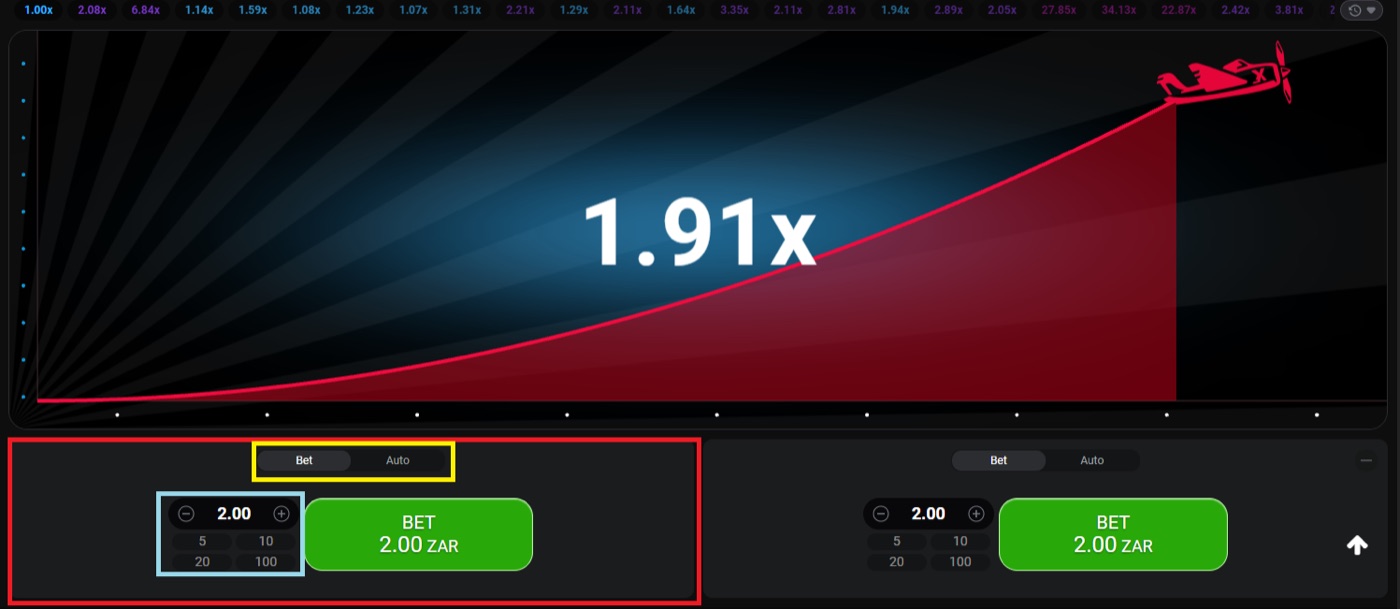
Aviator is a crash game by Spribe. Each round shows an increasing curve and a multiplier that can stop at any point, so session length depends on both round speed and player decisions.
A round lasts about 8-30 seconds. Players usually see 60-90 rounds in an hour, with only a few seconds between rounds. This pace makes a planned budget and regular breaks more useful than trying to guess the next crash point.
Round Pace
Aviator runs 60-90 rounds per hour. Each round lasts about 8-30 seconds.
The game presents two bet panels, separate cash-outs, a round-history panel, and live bets. These features give players many decisions to make during a short period, which can make an hour feel brief while the number of placed bets rises quickly.
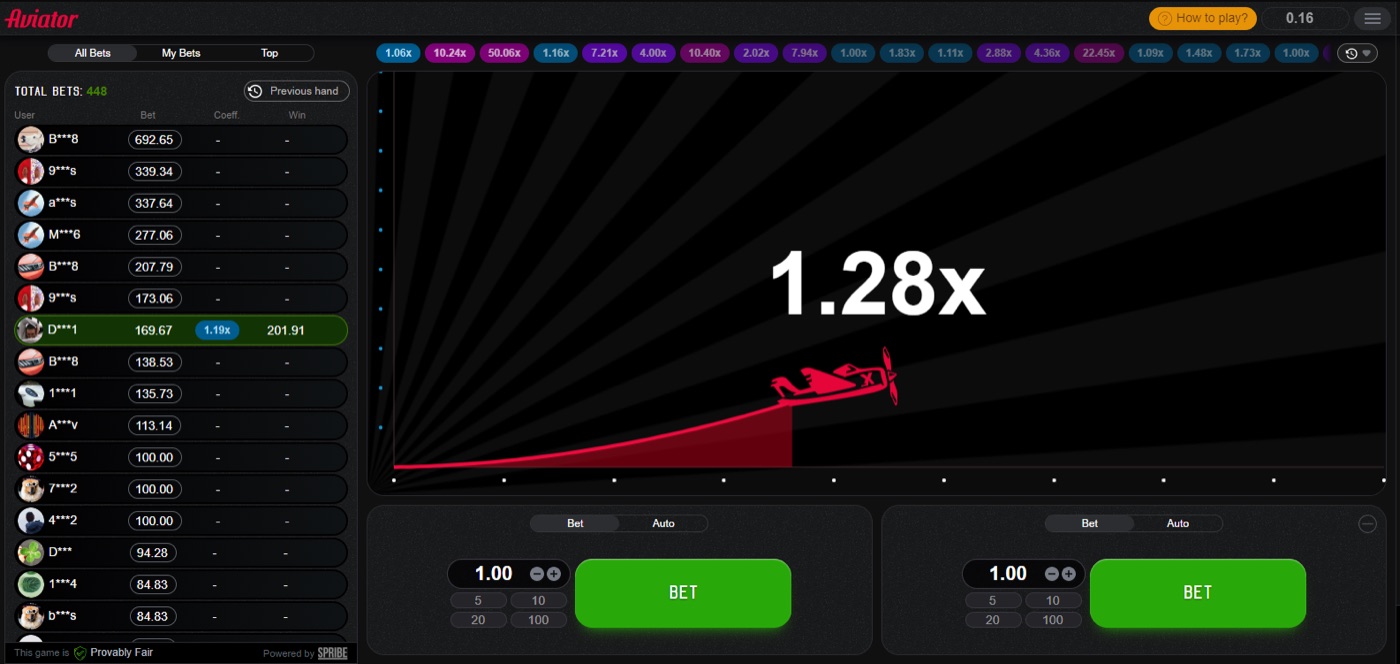
The Aviator screen shows the plane in flight before the round crashes.
Use the hourly pace as a planning number, not as a target. A player who stays for one hour may watch up to 90 rounds. Watching is not the same as betting, but the fast sequence can encourage repeated stakes.
- One hour can contain 60-90 rounds.
- A round can finish in 8 seconds or continue for about 30 seconds.
- A few seconds usually separate one round from the next.
- The next multiplier is not determined by the previous multiplier.
Rounds are independent. A low multiplier does not make a higher multiplier due, and a long round does not make an instant crash more likely in the next round. About 3% of rounds crash instantly at 1.00x, or roughly 1 in 33 rounds.
The published probability for a target multiplier m is 0.97 divided by m. That gives 80.8% for 1.2x, 64.7% for 1.5x, 48.5% for 2x, and 32.3% for 3x. These figures describe the round probabilities, not a promise for a particular session.
| Target multiplier | Probability the round reaches it | Practical pacing point |
|---|---|---|
| 1.2x | 80.8% | Still requires a timely cash-out |
| 1.5x | 64.7% | Often used as a preset target |
| 2x | 48.5% | Below half of rounds reach it |
| 5x | 19.4% | Less frequent target |
| 10x | 9.7% | Long target with high variance |
Session Budget
A 2% stake limit is one guide-based way to size a round. A session budget sets the total amount available before play begins.
Aviator has an RTP of 97% and a house edge of 3%. The expected value is minus 3% of the stake at every cash-out target, so changing session length does not remove the edge.
Start with a fixed amount that you are prepared to lose. Do not add funds because an earlier round ended quickly. Do not increase the stake because the next round looks overdue.
- Choose the total session budget before opening the game.
- Divide that budget into a planned number of rounds or short blocks.
- Keep the stake at or below 2% of the available bankroll per round.
- Set a loss limit before the first bet.
- Set a win limit that ends the session when reached.
For example, a 100-unit bankroll with a 2% round limit gives a maximum planned stake of 2 units per round. That example does not create a winning system. It limits the size of each decision and makes the budget easier to track across a fast sequence.
A shorter session can still lose its full budget. A longer session can include more rounds and more exposure to the 3% house edge. The important control is the amount committed, not the number of multipliers watched.
The two-bet layout can make budgeting less clear. Two separate bets in one round are still two stakes. Add them together when checking the round limit.
- Count both bet panels when calculating the total stake.
- Include automatic bets in the session budget.
- Do not treat a return as new budget until the session plan allows it.
- Stop when the loss limit is reached, even if several rounds remain in the planned block.
Martingale increases exposure after losses. After 10 losses, doubling reaches 1,024 times the base stake. Fibonacci and D’Alembert systems also do not beat the 3% house edge.
Responsible gambling means stopping when the planned budget or loss limit is reached.
Break Timing
A 60-90-round hour can pass quickly. A planned break interrupts that pace before repeated stakes become automatic.
Auto Play can run for 10-100 rounds and can use stop-on-win or stop-on-loss settings. Those settings control the sequence, but they do not replace a break outside the game.
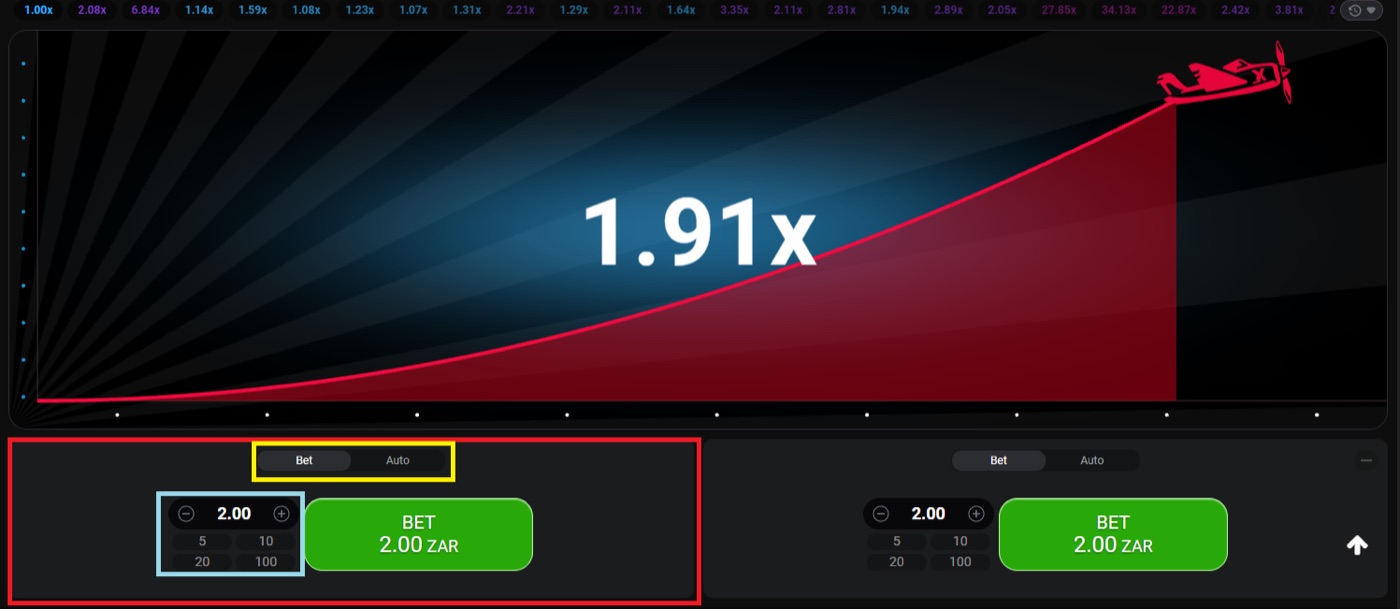
The desktop round shows 1.91x and two separate bet panels.
Use a break after a short block rather than waiting for a particular multiplier. The round history cannot identify a better time to play. Off-peak play may provide a smoother connection, but it does not improve the odds.
- Pause after a planned number of rounds.
- Pause when attention shifts from the budget to the recent results.
- Pause after a cash-out time-out or connection problem.
- Pause before changing the stake or cash-out target.
A break should take the player away from the round screen. Check the remaining budget after the break, not just the last result. If the loss limit has been reached, the break becomes the end of the session.
The session length should also account for the way automatic features work. Auto Cash-Out uses a preset multiplier. Auto Bet or Auto Play can continue while the player is not making each individual decision. Review the stop-on-win and stop-on-loss settings before starting them.
- Choose a round block.
- Set the automatic stop rules.
- Start the block with the same planned stake.
- Leave the screen when the block ends.
- Review the budget before deciding whether to continue.
Do not use a break to chase a loss. A pause is useful only when it preserves the original plan. If the plan changes after a loss, the break has not controlled the session.
Cash-Out Controls
Aviator gives each round two bet panels with separate cash-outs. Auto Cash-Out accepts a preset multiplier when the round reaches that level.
The probability of reaching 1.5x is 64.7%, while the probability of reaching 5x is 19.4%. A higher target therefore changes the frequency of successful cash-outs, but it does not change the 3% house edge.
Some guides use auto cash-out targets between 1.5x and 2x. Other guides describe a split approach: one bet cashes at 1.5x-2x, while the second aims at 5x-10x. These are approaches described in guides, not guarantees.
One clear rule matters during a break: do not leave automatic play running without checking its limits. A setting for 10 rounds and a setting for 100 rounds create very different exposure during the same unattended period.
- Check the stake on each bet panel.
- Check the cash-out target on each bet panel.
- Check whether Auto Bet or Auto Play is active.
- Check the stop-on-win and stop-on-loss settings.
- Check the remaining session budget before restarting.
Cash-out requests must reach the server before the crash. A slow device or latency can cause a cash-out time-out. The result does not change after the round starts, but a late request may not complete before the crash.
Long targets need a separate budget decision. The probability of reaching 10x is 9.7%, 20x is 4.85%, and 50x is 1.94%. A player who selects these targets should expect more rounds to end before the target.
Some gambling readers compare a crash game multiplier with a stake plan, bookmaker offer, RTP, or deposit decision while searching for an aviator jet app. Those subjects should remain separate from the round budget because none of them predicts the next crash point.
Fairness And Tools
Before each round, the server publishes a SHA-256 hash of the server seed. The crash point is fixed before take-off.
Player client seeds combine with the server seed, and the inputs become available after the round. The in-game verification tool lets players check the result.
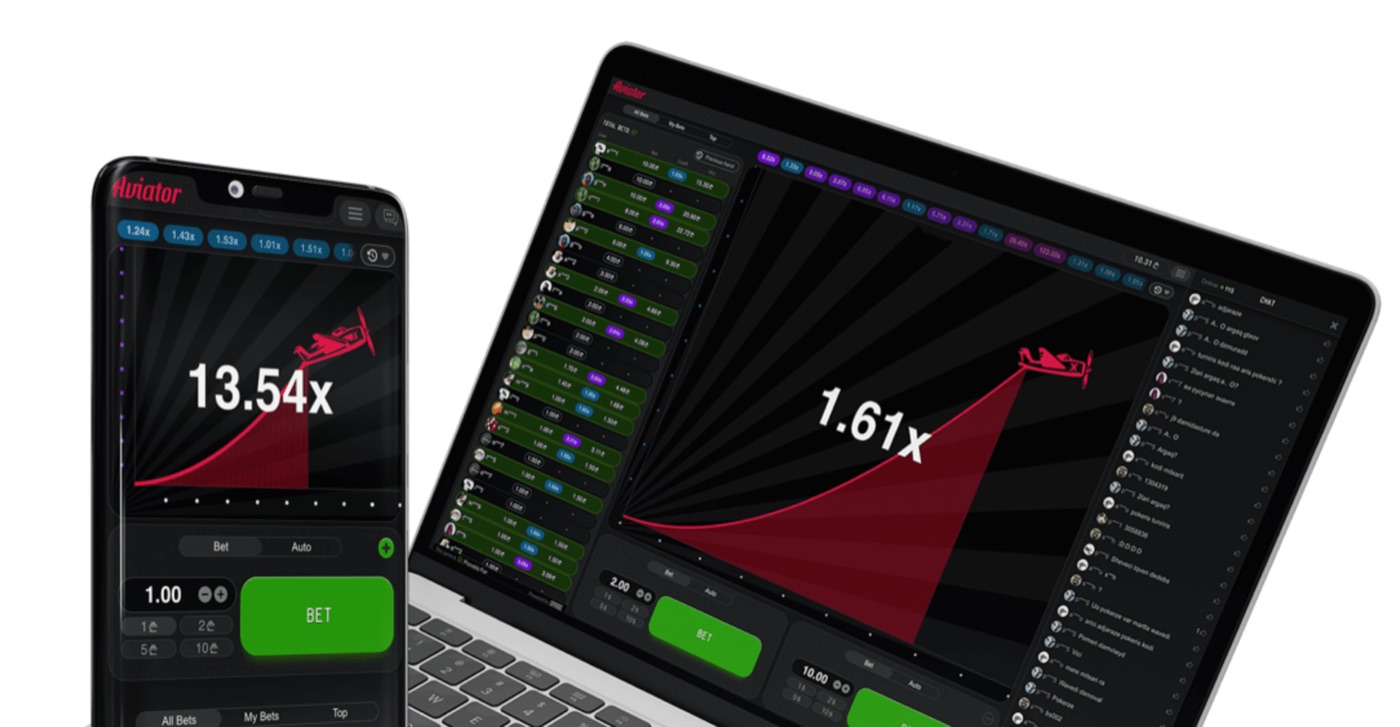
A phone and laptop display Aviator multipliers of 13.54x and 1.61x.
Neither the operator nor Spribe can change a result after the round starts. This system explains how the crash point is committed, but it does not make a session profitable or remove the house edge.
There is no standalone official Aviator app from Spribe. Aviator runs inside an operator’s website or app, while third-party apps and predictor tools may use virtual coins, advertisements, or public maths.
- Use the round history to review previous multipliers, not to predict the next one.
- Use the Provably Fair badge and verification tool to check completed rounds.
- Use demo mode to learn the interface without registration.
- Remember that demo results do not create a real-money budget or result.
Demo mode works on desktop, tablet, and mobile browsers. The game was built for low bandwidth and budget devices. The interface includes a live bets panel, chat, Bet and Auto tabs, and quick stake buttons.
Prediction is impossible because the crash point is committed by hash before the round. Patterns, graph analysis, strategy charts, and predictor bots do not change the odds.
Before a session, check the operator’s stake rules. Typical stakes range from about $0.10 to $100 per bet, but the amount depends on the operator. Win caps per round also depend on the operator.
Aviator FAQ
Aviator rounds last about 8-30 seconds. The game commonly presents 60-90 rounds per hour.
Spribe’s published RTP is 97%, and the house edge is 3%. The following answers keep session length, breaks, and round pacing separate from prediction claims.
How long should an Aviator session last?
the available information does not set one correct session length. Use a fixed budget, a loss limit, and planned breaks instead of extending play to reach a particular multiplier.
How many rounds are in one hour?
Aviator usually runs 60-90 rounds per hour. A round lasts about 8-30 seconds, with a few seconds between rounds. Watching all those rounds does not require betting on all of them.
Does a break improve the odds?
No. Rounds are independent, and a break does not alter the probability of a multiplier. A break can separate decisions, protect a budget, and stop automatic play from continuing without review.
Can I use Auto Play during a break?
Auto Play can run for 10-100 rounds and can include stop-on-win or stop-on-loss settings. Review those settings first, because automatic play can continue placing stakes during the break.
Can a predictor identify the next crash?
No. The crash point is fixed before take-off through the provably fair system. Predictor apps, bots, patterns, and graph analysis do not change the next round’s odds.
Why did my cash-out time out?
The cash-out request must reach the server before the crash. Latency or a slow device can delay the request, so a time-out does not show that the result changed after the round started.